

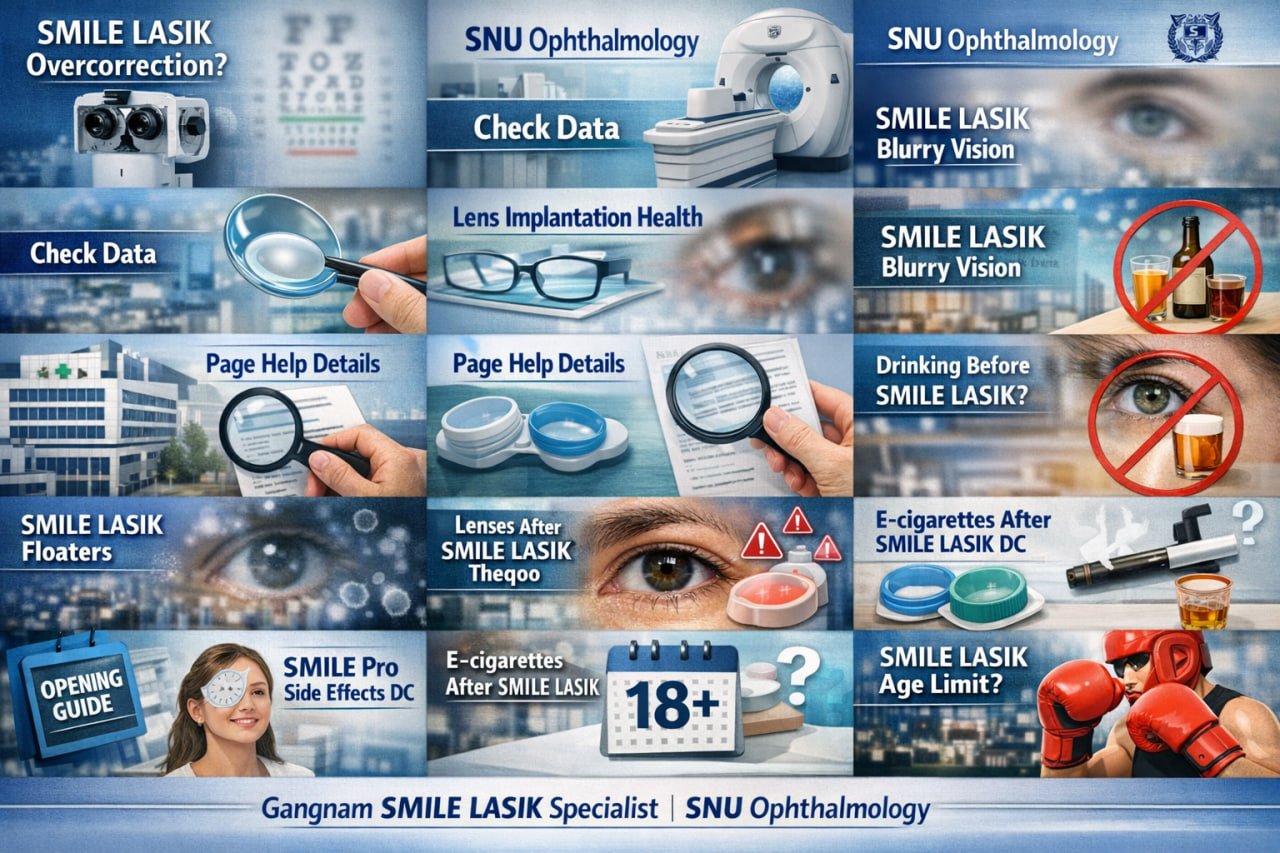
Introduction to SMILE LASIK and Vision Clarity
SMILE LASIK has rapidly become one of the most sought-after procedures for correcting nearsightedness and astigmatism. As patients pursue clearer vision without glasses or contact lenses, advanced techniques such as SMILE Pro have gained global recognition. Specialists at SNU안과 and 에스앤유안과 often explain that understanding both temporary side effects and eligibility criteria helps patients make informed decisions.
Blurry vision and age limitations are two of the most frequently discussed topics among people considering this surgery. Online communities often discuss experiences using terms like 스마일라식 뿌연 증상 or 스마일라식 나이제한 while comparing clinics such as snuseoul.com and researching reviews.
While these concerns are valid, most patients experience safe outcomes when proper screening and surgical planning are performed by experienced ophthalmologists.
Why Blurry Vision Occurs After SMILE LASIK
Temporary blurry vision is a common early symptom after refractive surgery. Patients sometimes describe it using the phrase 스마일라식 뿌연 증상, referring to hazy or foggy vision during the first days after surgery.
This occurs because the cornea undergoes microscopic healing changes after the laser reshapes its internal structure. Mild swelling, tear film instability, and natural healing responses may briefly affect visual clarity.
In most cases, vision improves rapidly within several days. Many patients report significant improvement within 24 hours, although full stabilization can take several weeks.
Doctors advise using prescribed lubricating eye drops and avoiding excessive screen exposure during early recovery. Adequate rest allows the tear film to stabilize and the cornea to regain optimal transparency.
Understanding the Age Limit for SMILE LASIK
Age eligibility is another crucial factor when considering laser vision correction. Patients frequently ask about 스마일라식 나이제한 when researching procedures online.
Most ophthalmologists recommend that candidates be at least 18 to 20 years old. This ensures that the patient’s vision prescription has stabilized and that refractive changes are no longer progressing rapidly.
However, there is usually no strict upper age limit. Older patients may still be eligible if their corneas are healthy and they do not have advanced cataracts or other eye diseases.
In some cases, patients with age-related vision conditions may be better suited for alternative procedures such as lens implantation surgery. Online discussions about 렌즈삽입술 헬스 often explore these options when LASIK is not ideal.
Comprehensive eye examinations determine the best surgical approach for each individual.
Pre-Surgery Evaluation and Patient Screening
A thorough examination is essential before performing SMILE LASIK. Ophthalmologists measure corneal thickness, curvature, pupil size, and refractive error to determine suitability.
Specialists at clinics like snuseoul.com also perform retinal evaluations to ensure there are no underlying issues that might affect surgical outcomes. This process helps identify potential complications before surgery.
Patients sometimes research terms like help check see, 자료 자료 확인, or guide extra go when trying to understand the pre-surgical assessment process. These evaluations ensure precise planning and personalized treatment.
By analyzing detailed corneal maps and optical measurements, surgeons can design accurate laser corrections that reduce the risk of complications such as overcorrection or undercorrection.
Managing Vision Fluctuations During Recovery
Even after successful surgery, minor vision fluctuations may occur during the healing phase. These fluctuations can cause temporary haze, dryness, or glare.
Online discussions frequently mention topics such as 스마일프로 부작용 디시 or 스마일라식 후 렌즈 더쿠 when patients compare post-surgery experiences. In reality, most symptoms gradually resolve as the cornea stabilizes.
Artificial tears and anti-inflammatory drops help maintain moisture and reduce irritation. Doctors also advise limiting late-night screen exposure during the first weeks after surgery.
Patients should attend all follow-up appointments so that ophthalmologists can monitor corneal healing and ensure that vision improvement progresses normally.
Lifestyle Considerations Before and After Surgery
Lifestyle habits play an important role in both surgical preparation and recovery. Patients researching the procedure often encounter advice about 스마일라식 전 음주 and other behavioral precautions.
Avoiding alcohol shortly before surgery helps maintain proper hydration and tear film stability. Smoking or vaping should also be limited during recovery because it may irritate the eyes.
Many patients also ask about exercise after surgery. Discussions referencing 스마일라식 복싱 디시 highlight concerns about sports participation. Doctors typically recommend avoiding contact sports for several weeks until the eye fully heals.
Protecting the eyes from dust, strong sunlight, and water exposure during early recovery further supports stable healing.
Reliable Information and Long-Term Eye Health
Accurate information is essential for patients preparing for vision correction surgery. Many clinics provide educational materials through online sections labeled 페이지 도움말 상세 or 내용 보기 전체보기.
These resources help patients understand surgical procedures, risks, and expected outcomes. They also guide individuals through preparation steps and recovery instructions.
While online forums can offer personal experiences, professional consultation remains the most reliable source of information. Ophthalmologists can evaluate individual eye health and recommend appropriate treatments.
For most patients, SMILE LASIK provides excellent long-term visual improvement. When performed by experienced specialists and supported by proper post-operative care, the procedure allows patients to enjoy clearer vision and improved daily comfort.